Your network contains an Active Directory Domain Services (AD DS) domain that has the Active Directory Recycle Bin enabled. All domain controllers are backed up daily.
You accidentally remove all the users from a domain group.
You need to get a list of the users that were previously in the group.
Which four actions should you perform in sequence from a domain controller? To answer, move the appropriate actions from the list of actions to the answer area and arrange them in the correct order.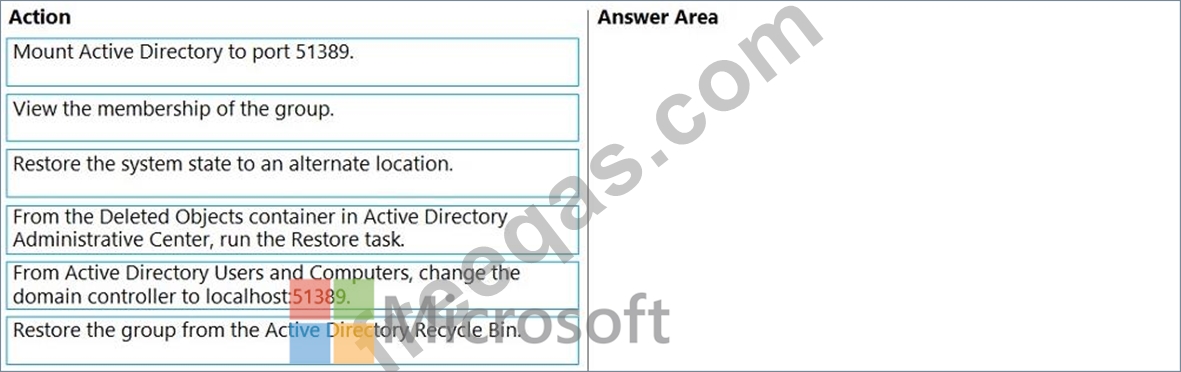

You have an on-premises IIS web server that hosts a web app named Appl. You plan to migrate App1 to a container and run the container in Azure. You need to perform the following tasks:
* Export App1 to a ZIP file.
* Create a container image based on Appl.
The solution must minimize administrative effort.

Your network contains an Active Directory Domain Services (AD DS) forest. The forest contains the domains shown in the following table.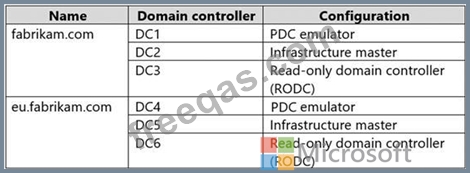
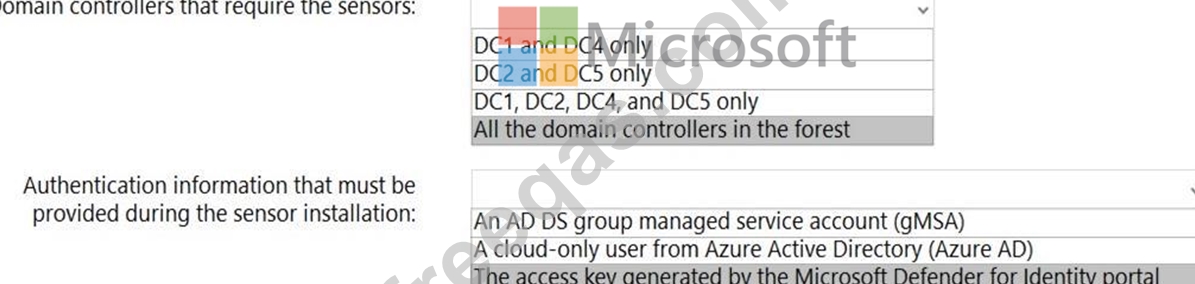
You are implementing Microsoft Defender for Identity sensors.
You need to install the sensors on the minimum number of domain controllers. The solution must ensure that Defender for Identity will detect all the security risks in both the domains.
What should you identify? To answer, select the appropriate options in the answer area.
NOTE: Each correct selection is worth one point.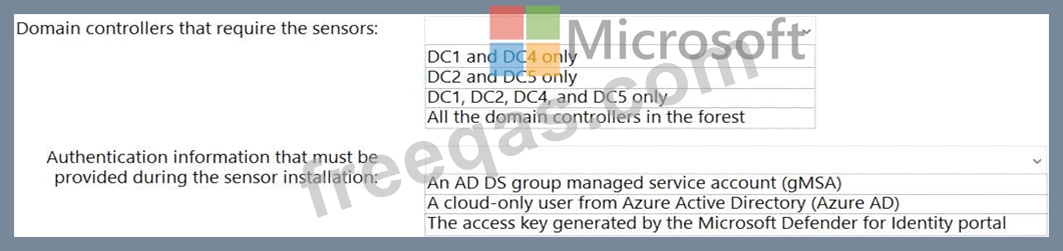
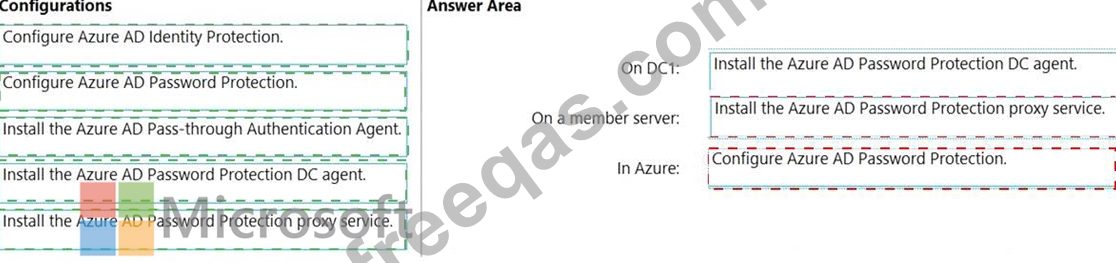
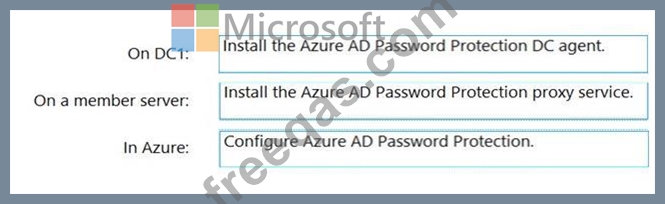
You have an on-premises Active Directory Domain Services (AD DS) domain that syncs with an Azure Active Directory (Azure AD) tenant.
The AD DS domain contains a domain controller named DC1. DC1 does NOT have internet access.
You need to configure password security for on-premises users. The solution must meet the following requirements:
* Prevent the users from using known weak passwords.
* Prevent the users from using the company name in passwords.
What should you do? To answer, drag the appropriate configurations to the correct targets. Each configuration may be used once, more than once, or not at all. You may need to drag the split bar between panes or scroll to view content.
NOTE: Each correct selection is worth one point.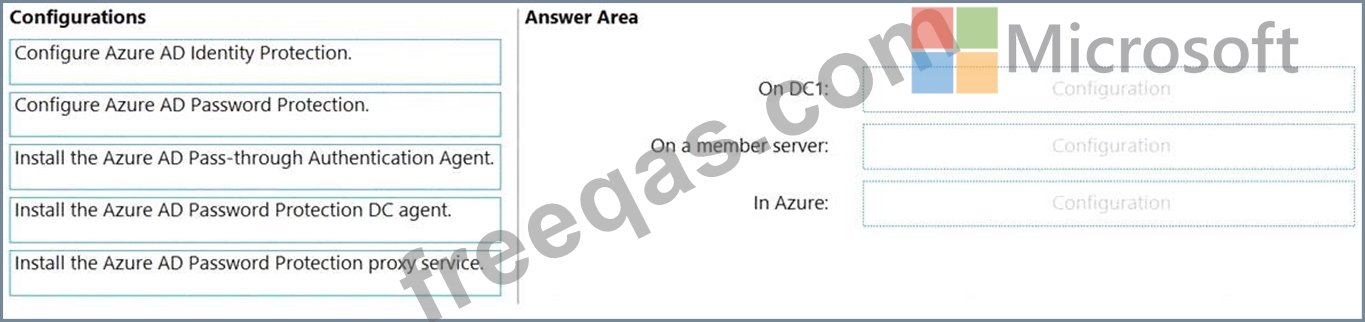
You have a server named Server1 that runs Windows Server.
You need to ensure that only specific applications can modify the data in protected folders on Server1.
Solution: From App & browser control, you configure the Reputation-based protection.
Does this meet the goal?

