Evaluate the following query:
SQL> SELECT TRUNC (ROUND (156.00, -1),-1)
FROM DUAL;
What would be the outcome?
View the exhibit and examine the description of the DEPARTMENTS and EMPLOYEES tables.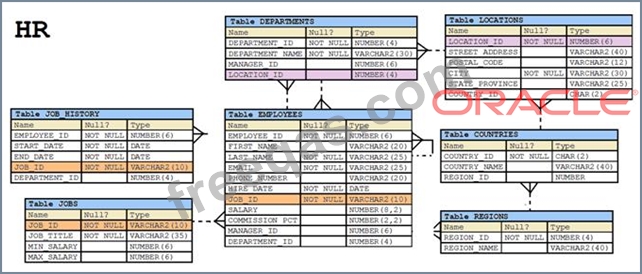
You wrote this SQL statement to retrieve EMPLOYEE_ID, FIRST_NAME, and DEPARTMENT NAME, for all employees:
SELECT employee_id, first_name, department_name
FROM employees
NATURAL JOIN departments;
The desired output is not obtained after executing the above SQL statement. What could be the reason for this?
View the Exhibit and examine the structure of CUSTOMERStable.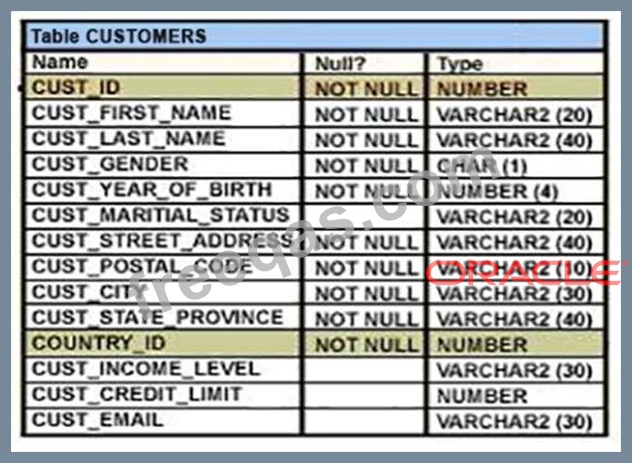
Evaluate the following query: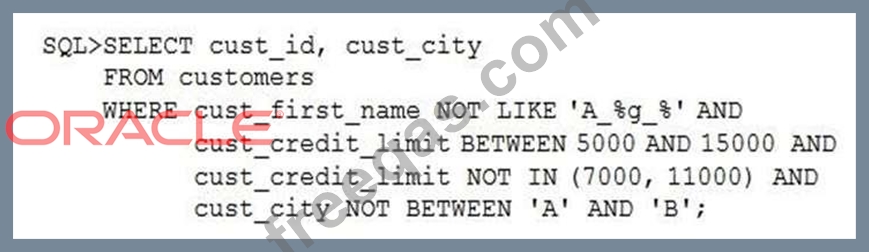
Which statement is true regarding the above query?
Examine the structure of the SALES table.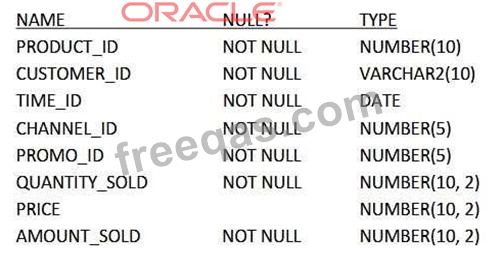
Examine this statement: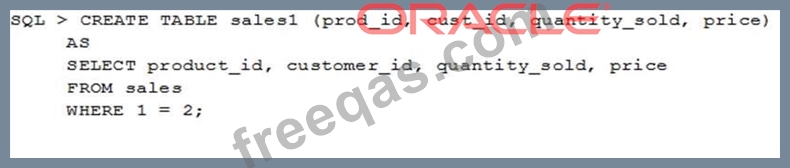
Which two statements are true about the SALES1 table? (Choose two.)
View the exhibit and examine the ORDERStable.
ORDERS
Null? Type
Name
ORDER ID NOT NULL NUMBER(4)
ORDATE DATE DATE
CUSTOMER ID NUMBER(3)
ORDER TOTAL NUMBER(7,2)
The ORDERStable contains data and all orders have been assigned a customer ID. Which statement would add a NOTNULLconstraint to the CUSTOMER_IDcolumn?

