Examine the SQL statement used to create the TRANSACTION table.
SQL > CREATE TABLE transaction
(trn_id char(2) primary key,
Start_date date DEFAULT SYSDATE,
End_date date NOT NULL);
The value 'A1' does not exist for trn_id in this table.
Which SQL statement successfully inserts a row into the table with the default value for START_DATE?
You execute the SQL statement:
SQL> CREATE TABLE citizens
(citizen_id CHAR (10) PRIMARY KEY,
last_name VARCHAR2 (50) NOT NULL,
first_name VARCHAR2 (50),
address VARCHAR2 (100),
city VARCHAR2 (30) DEFAULT 'SEATTLE' NOT NULL,
CONSTRAINT cnames CHECK (first_name<>last_name) );
What is the outcome?
View the Exhibit and examine the structure of the PRODUCTS table.
You must display the category with the maximum number of items.
You issue this query: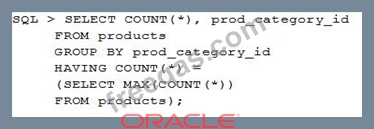
What is the result?
View the Exhibit and examine the structure of the SALESand PRODUCTStables. (Choose two.)
In the SALEStable, PROD_ID is the foreign key referencing PROD_ID in the PRODUCTS table. You must list each product ID and the number of times it has been sold.
Examine this query which is missing a JOINoperator: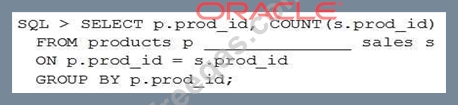
Which two JOINoperations can be used to obtain the required output? (Choose two.) FULL OUTER JOIN

