While investigating a data issue, you wanted to review yesterday's version of the table using below command, while querying the previous version of the table using time travel you realized that you are no longer able to view the historical data in the table and you could see it the table was updated yesterday based on the table history(DESCRIBE HISTORY table_name) command what could be the reason why you can not access this data?
SELECT * FROM table_name TIMESTAMP AS OF date_sub(current_date(), 1)
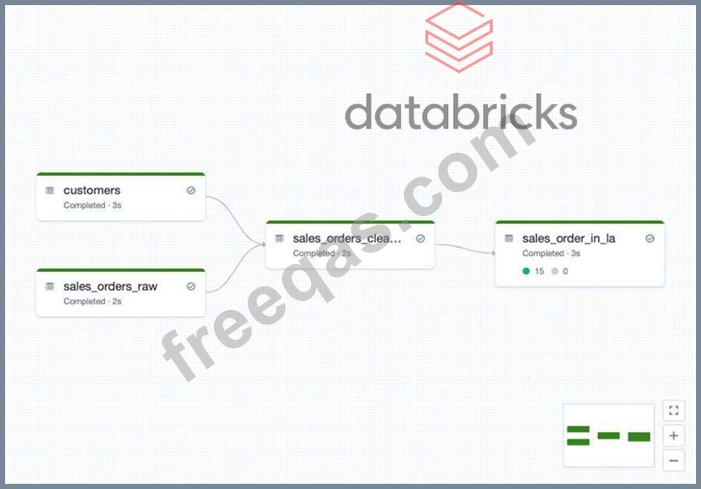
You are currently asked to work on building a data pipeline, you have noticed that you are currently working on a very large scale ETL many data dependencies, which of the following tools can be used to address this problem?
A data engineer has configured a Structured Streaming job to read from a table, manipulate the data, and then
perform a streaming write into a new table. The code block used by the data engineer is below:
1. (spark.table("sales")
2. .withColumn("avg_price", col("sales") / col("units"))
3. .writeStream
4. .option("checkpointLocation", checkpointPath)
5. .outputMode("complete")
6. ._____
7. .table("new_sales")
8.)
If the data engineer only wants the query to execute a single micro-batch to process all of the available data,
which of the following lines of code should the data engineer use to fill in the blank?
The data engineering team is using a SQL query to review data completeness every day to monitor the ETL job, and query output is being used in multiple dashboards which of the following ap-proaches can be used to set up a schedule and automate this process?
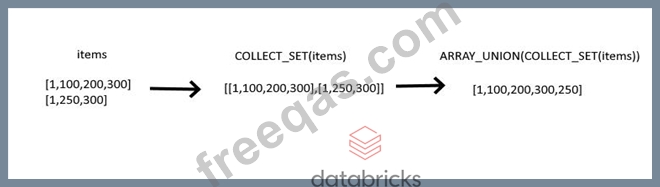
Below sample input data contains two columns, one cartId also known as session id, and the second column is called items, every time a customer makes a change to the cart this is stored as an array in the table, the Marketing team asked you to create a unique list of item's that were ever added to the cart by each customer, fill in blanks by choosing the appropriate array function so the query produces below expected result as shown below.
Schema: cartId INT, items Array<INT>
Sample Data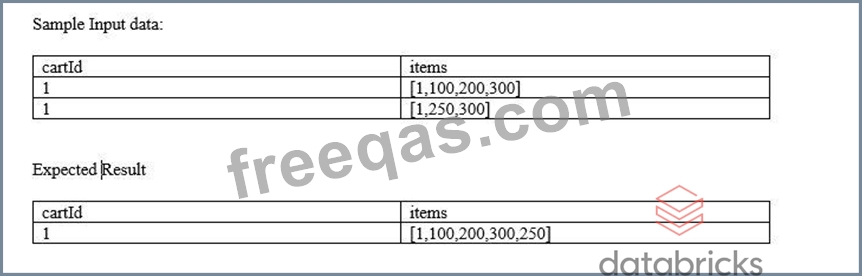
1.SELECT cartId, ___ (___(items)) as items
2.FROM carts GROUP BY cartId
Expected result:
cartId items
1 [1,100,200,300,250]
Enter your email address to download Databricks.Databricks-Certified-Professional-Data-Engineer.v2024-05-28.q108 Dumps

