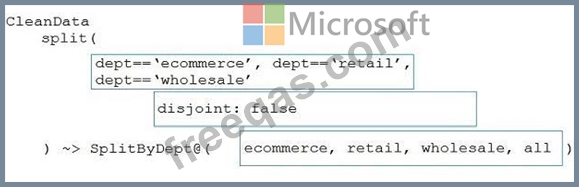
You need to create an Azure Data Factory pipeline to process data for the following three departments at your company: Ecommerce, retail, and wholesale. The solution must ensure that data can also be processed for the entire company.
How should you complete the Data Factory data flow script? To answer, drag the appropriate values to the correct targets. Each value may be used once, more than once, or not at all. You may need to drag the split bar between panes or scroll to view content.
NOTE: Each correct selection is worth one point.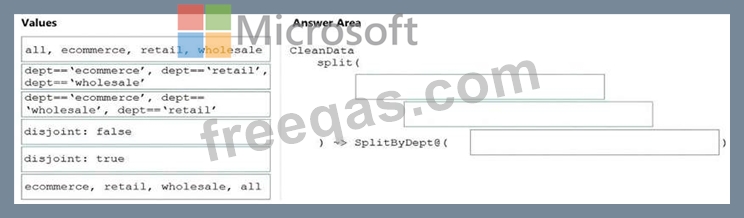

You have files and folders in Azure Data Lake Storage Gen2 for an Azure Synapse workspace as shown in the following exhibit.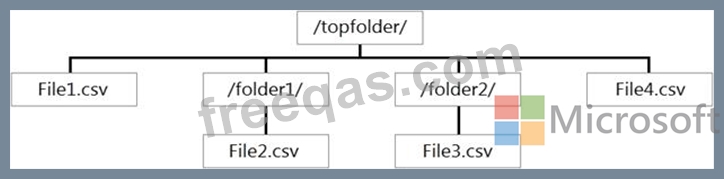
You create an external table named ExtTable that has LOCATION='/topfolder/'.
When you query ExtTable by using an Azure Synapse Analytics serverless SQL pool, which files are returned?
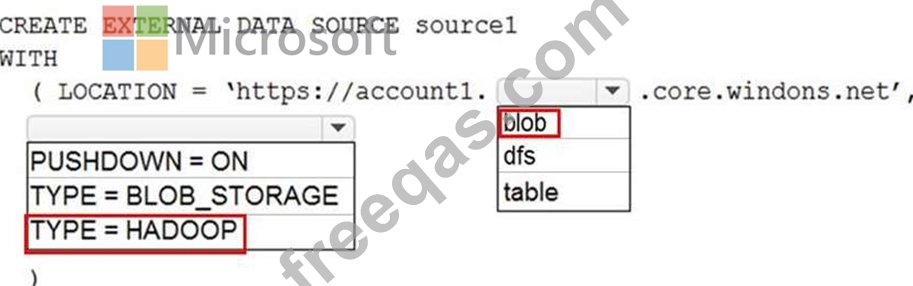
You have an Azure Synapse Analytics dedicated SQL pool named Pool1 and an Azure Data Lake Storage Gen2 account named Account1.
You plan to access the files in Account1 by using an external table.
You need to create a data source in Pool1 that you can reference when you create the external table.
How should you complete the Transact-SQL statement? To answer, select the appropriate options in the answer area.
NOTE: Each correct selection is worth one point.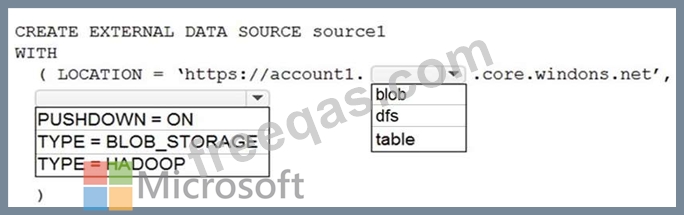
You configure monitoring for a Microsoft Azure SQL Data Warehouse implementation. The implementation uses PolyBase to load data from comma-separated value (CSV) files stored in Azure Data Lake Gen 2 using an external table.
Files with an invalid schema cause errors to occur.
You need to monitor for an invalid schema error.
For which error should you monitor?
You have an Azure Data Lake Storage Gen2 container.
Data is ingested into the container, and then transformed by a data integration application. The data is NOT modified after that. Users can read files in the container but cannot modify the files.
You need to design a data archiving solution that meets the following requirements:
New data is accessed frequently and must be available as quickly as possible.
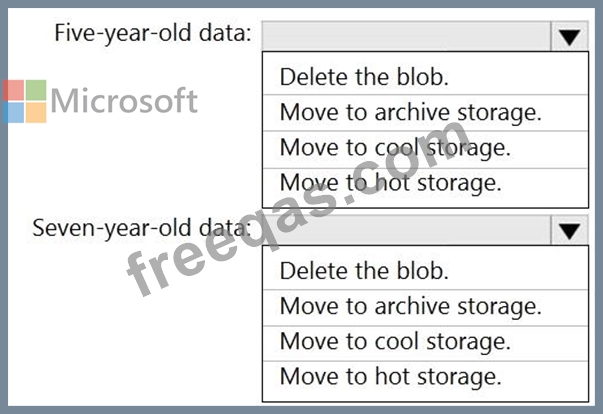
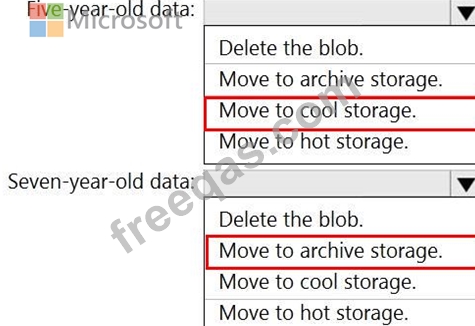
Data that is older than five years is accessed infrequently but must be available within one second when requested.
Data that is older than seven years is NOT accessed. After seven years, the data must be persisted at the lowest cost possible.
Costs must be minimized while maintaining the required availability.
How should you manage the data? To answer, select the appropriate options in the answer area.
NOTE: Each correct selection is worth one point