Which two statements are true about the ORDER BY clause when used with a SQL statement containing a SET operator such as UNION?
View the exhibit and examine the ORDERS table.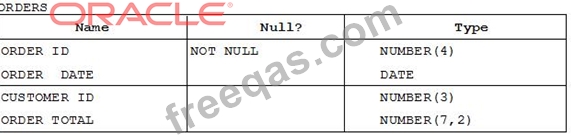
The ORDERS table contains data and all orders have been assigned a customer ID. Which statement would add a NOT NULL constraint to the CUSTOMER_ID column?
The sales table has columns prod_id and quantity_sold of data type number. Which two queries execute successfully?
Examine this partial query:
SELECT ch.channel_type, t.month, co.country_code, SUM(s.amount_sold) SALES
FROM sales s, times t, channels ch, countries co
WHERE s.time_ id = t.time id
AND s.country_ id = co. country id
AND s. channel id = ch.channel id
AND ch.channel type IN ('Direct Sales', 'Internet')
AND t.month IN ('2000-09', '2000-10')
AND co.country code IN ('GB', 'US')
Examine this output: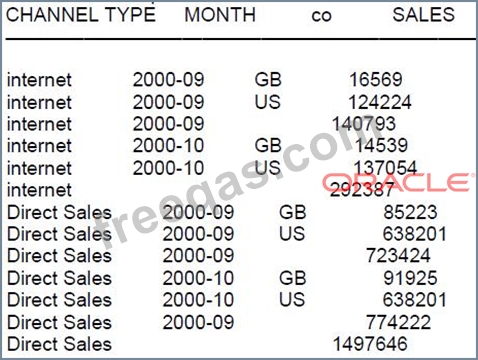
Which GROUP BY clause must be added so the query returns the results shown?
Evaluate the following statement.
INSERT ALL
WHEN order_total < 10000 THEN
INTO small_orders
WHEN order_total > 10000 AND order_total < 20000 THEN
INTO medium_orders
WHEN order_total > 200000 AND order_total < 20000 THEN
INTO large_orders
SELECT order_id, order_total, customer_id
FROM orders;
Which statement is true regarding the evaluation of rows returned by the subquery in the INSERT statement?

