FreeQAs
 Request Exam  Contact
  • Home
  • View All Exams
  • New QA's
  • Upload
PRACTICE EXAMS:
  • Oracle
  • Fortinet
  • Juniper
  • Microsoft
  • Cisco
  • Citrix
  • CompTIA
  • VMware
  • ISC
  • SAP
  • EMC
  • PMI
  • HP
  • Salesforce
  • Other
  • Oracle
    Oracle
  • Fortinet
    Fortinet
  • Juniper
    Juniper
  • Microsoft
    Microsoft
  • Cisco
    Cisco
  • Citrix
    Citrix
  • CompTIA
    CompTIA
  • VMware
    VMware
  • ISC
    ISC
  • SAP
    SAP
  • EMC
    EMC
  • PMI
    PMI
  • HP
    HP
  • Salesforce
    Salesforce
  1. Home
  2. Salesforce Certification
  3. MuleSoft-Integration-Architect-I Exam
  4. Salesforce.MuleSoft-Integration-Architect-I.v2026-07-22.q100 Dumps
  • ««
  • «
  • …
  • 12
  • 13
  • 14
  • 15
  • 16
  • 17
  • 18
  • 19
  • 20
  • 21
  • »
Download Now

Question 81

Refer to the exhibit.

An organization deploys multiple Mule applications to the same customer -hosted Mule runtime. Many of these Mule applications must expose an HTTPS endpoint on the same port using a server-side certificate that rotates often.
What is the most effective way to package the HTTP Listener and package or store the server-side certificate when deploying these Mule applications, so the disruption caused by certificate rotation is minimized?

Correct Answer: B
In this scenario, both A & C will work, but A is better as it does not require repackage to the domain project at all.
Correct answer is Package the HTTPS Listener configuration in a Mule DOMAIN project, referencing it from all Mule applications that need to expose an HTTPS endpoint. Store the server-side certificate in a shared filesystem location in the Mule runtime's classpath, OUTSIDE the Mule DOMAIN or any Mule APPLICATION.
What is Mule Domain Project?
* A Mule Domain Project is implemented to configure the resources that are shared among different projects.
These resources can be used by all the projects associated with this domain. Mule applications can be associated with only one domain, but a domain can be associated with multiple projects. Shared resources allow multiple development teams to work in parallel using the same set of reusable connectors. Defining these connectors as shared resources at the domain level allows the team to: - Expose multiple services within the domain through the same port. - Share the connection to persistent storage. - Share services between apps through a well-defined interface. - Ensure consistency between apps upon any changes because the configuration is only set in one place.
* Use domains Project to share the same host and port among multiple projects. You can declare the http connector within a domain project and associate the domain project with other projects. Doing this also allows to control thread settings, keystore configurations, time outs for all the requests made within multiple applications. You may think that one can also achieve this by duplicating the http connector configuration across all the applications. But, doing this may pose a nightmare if you have to make a change and redeploy all the applications.
* If you use connector configuration in the domain and let all the applications use the new domain instead of a default domain, you will maintain only one copy of the http connector configuration. Any changes will require only the domain to the redeployed instead of all the applications.
You can start using domains in only three steps:
1) Create a Mule Domain project
2) Create the global connector configurations which needs to be shared across the applications inside the Mule Domain project
3) Modify the value of domain in mule-deploy.properties file of the applications Graphical user interface Description automatically generated

Use a certificate defined in already deployed Mule domain Configure the certificate in the domain so that the API proxy HTTPS Listener references it, and then deploy the secure API proxy to the target Runtime Fabric, or on-premises target. (CloudHub is not supported with this approach because it does not support Mule domains.)
insert code

Question 82

Refer to the exhibit.

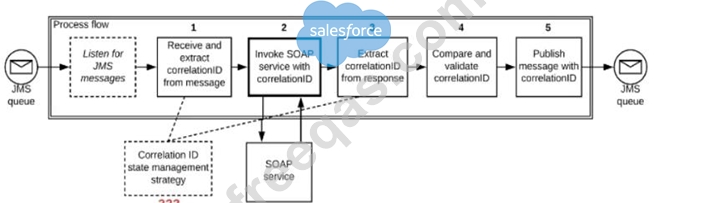
A Mule application is deployed to a multi-node Mule runtime cluster. The Mule application uses the competing consumer pattern among its cluster replicas to receive JMS messages from a JMS queue. To process each received JMS message, the following steps are performed in a flow:
Step l: The JMS Correlation ID header is read from the received JMS message.
Step 2: The Mule application invokes an idempotent SOAP webservice over HTTPS, passing the JMS Correlation ID as one parameter in the SOAP request.
Step 3: The response from the SOAP webservice also returns the same JMS Correlation ID.
Step 4: The JMS Correlation ID received from the SOAP webservice is validated to be identical to the JMS Correlation ID received in Step 1.
Step 5: The Mule application creates a response JMS message, setting the JMS Correlation ID message header to the validated JMS Correlation ID and publishes that message to a response JMS queue.
Where should the Mule application store the JMS Correlation ID values received in Step 1 and Step 3 so that the validation in Step 4 can be performed, while also making the overall Mule application highly available, fault-tolerant, performant, and maintainable?
Correct Answer: C
* If we store Correlation id value in step 1 as Mule event variables/attributes, the values will be cleared after server restart and we want system to be fault tolerant.
* The Correlation ID value in Step 1 should be stored in a persistent object store.
* We don't need to store Correlation ID value in Step 3 to persistent object store. We can store it but as we also need to make application performant. We can avoid this step of accessing persistent object store.
* Accessing persistent object stores slow down the performance as persistent object stores are by default stored in shared file systems.
* As the SOAP service is idempotent in nature. In case of any failures , using this Correlation ID saved in first step we can make call to SOAP service and validate the Correlation ID.
Top of Form
Additional Information:
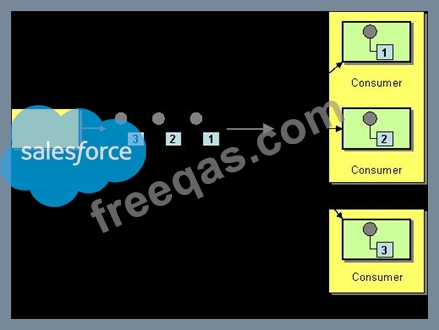
* Competing Consumers are multiple consumers that are all created to receive messages from a single Point-to-Point Channel. When the channel delivers a message, any of the consumers could potentially receive it. The messaging system's implementation determines which consumer actually receives the message, but in effect the consumers compete with each other to be the receiver. Once a consumer receives a message, it can delegate to the rest of its application to help process the message.

* In case you are unaware about term idempotent re is more info:
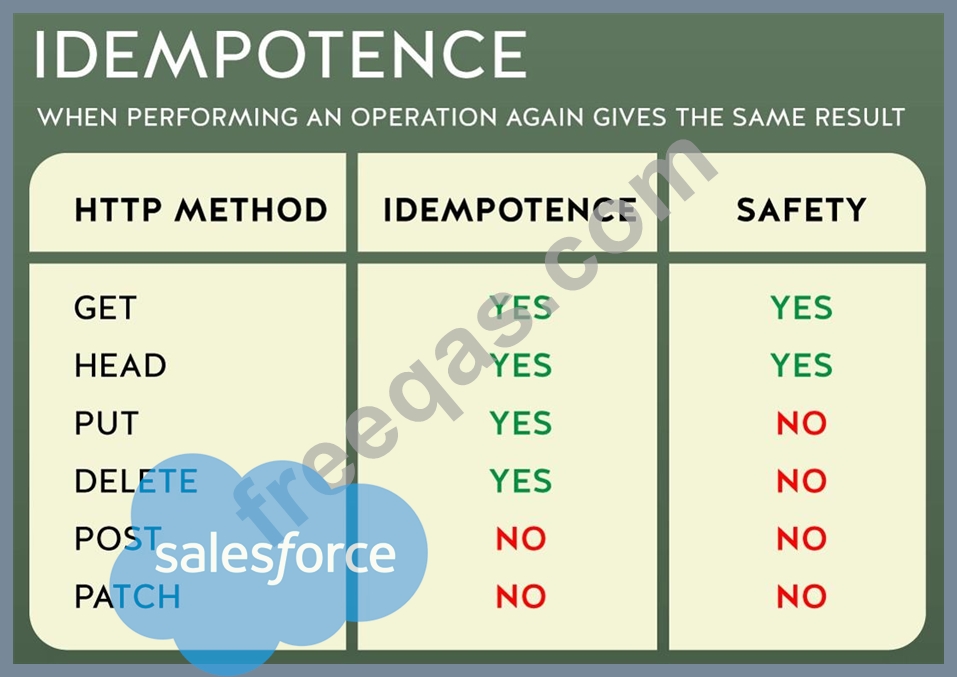
Idempotent operations means their result will always same no matter how many times these operations are invoked.

Bottom of Form
insert code

Question 83

A rale limiting policy has been applied to a soap VI.2 API published in Clondhub. The API implementation catches errors in a global error handler on error propagate in the main flow for HTTP:
RETRY_EXHAUSTED with HTTP status set to 429 and any with the HTTP status set to 500.
What is the expected H1TP status when the client exceeds the quota of the API calls?

Correct Answer: A
In the given scenario, a rate limiting policy has been applied to the SOAP API and a global error handler is configured to handle HTTP:RETRY_EXHAUSTED errors with a 429 status code. The rate limiting policy will trigger when the client exceeds the allowed quota of API calls. Since the HTTP:RETRY_EXHAUSTED error specifically catches quota exhaustion errors and the error handler is configured to return a 429 status code, the expected HTTP status returned to the client when the quota is exceeded will be 429. This error code indicates that the user has sent too many requests in a given amount of time ("rate limiting").
References:
* MuleSoft Documentation on Error Handling
* HTTP Status Codes
insert code

Question 84

A team has completed the build and test activities for a Mule application that implements a System API for its application network.
Which Anypoint Platform component should the team now use to both deploy and monitor the System AP\ implementation?

Correct Answer: B
insert code

Question 85

An organization is building a test suite for their applications using m-unit. The integration architect has recommended using test recorder in studio to record the processing flows and then configure unit tests based on the capture events What are the two considerations that must be kept in mind while using test recorder (Choose two answers)

Correct Answer: A,D
* When using MUnit's test recorder in Anypoint Studio to create unit tests, consider the following points:
A: Tests for flows cannot be created with Mule errors raised inside the flow or already existing in the incoming event:
* Explanation: The test recorder cannot record flows if Mule errors are raised during the flow execution or if the incoming event already contains errors. This limitation requires users to handle or clear errors before recording the flow to ensure accurate test creation.
D: A recorded flow execution ends successfully but the result does not reach its destination because the application is killed:
* Explanation: If the application is killed before the recorded flow execution completes, the recorder captures the flow up to the point of termination. However, the final result may not be reached or recorded. This scenario should be avoided to ensure complete and reliable test recordings.
These considerations help ensure the accuracy and reliability of tests created using the test recorder.
References:
* MUnit Documentation: https://docs.mulesoft.com/munit/2.2/
* MUnit Test Recorder: https://blogs.mulesoft.com/dev/mule-dev/using-the-munit-test-recorder/
insert code
  • ««
  • «
  • …
  • 12
  • 13
  • 14
  • 15
  • 16
  • 17
  • 18
  • 19
  • 20
  • 21
  • »
[×]

Download PDF File

Enter your email address to download Salesforce.MuleSoft-Integration-Architect-I.v2026-07-22.q100 Dumps


Email:

FreeQAs

Our website provides the Largest and the most Latest vendors Certification Exam materials around the world.

Using dumps we provide to Pass the Exam, we has the Valid Dumps with passing guranteed just which you need.

  • DMCA
  • About
  • Contact Us
  • Privacy Policy
  • Terms & Conditions
©2026 FreeQAs

www.freeqas.com materials do not contain actual questions and answers from Cisco's certification exams.