FreeQAs
 Request Exam  Contact
  • Home
  • View All Exams
  • New QA's
  • Upload
PRACTICE EXAMS:
  • Oracle
  • Fortinet
  • Juniper
  • Microsoft
  • Cisco
  • Citrix
  • CompTIA
  • VMware
  • ISC
  • SAP
  • EMC
  • PMI
  • HP
  • Salesforce
  • Other
  • Oracle
    Oracle
  • Fortinet
    Fortinet
  • Juniper
    Juniper
  • Microsoft
    Microsoft
  • Cisco
    Cisco
  • Citrix
    Citrix
  • CompTIA
    CompTIA
  • VMware
    VMware
  • ISC
    ISC
  • SAP
    SAP
  • EMC
    EMC
  • PMI
    PMI
  • HP
    HP
  • Salesforce
    Salesforce
  1. Home
  2. Huawei Certification
  3. H12-891_V1.0 Exam
  4. Huawei.H12-891_V1.0.v2026-06-05.q295 Dumps
  • ««
  • «
  • …
  • 50
  • 51
  • 52
  • 53
  • 54
  • 55
  • 56
  • 57
  • 58
  • 59
  • …
  • »
  • »»
Download Now

Question 266

With an existing network running OSPF, what types of LSAs cause ISPF operations?

Correct Answer: D,E
insert code

Question 267

This figure shows an SRv6 (Segment Routing over IPv6) packet. If the Destination Address field in the IPv6 basic header is FC04::4, the value of the SL (Segment Left) field in the SRv6 header should be ____. (Enter only digits.)

Correct Answer:
1
Explanation:
Comprehensive and Detailed In-Depth 1. Understanding SRv6 (Segment Routing over IPv6):SRv6 uses the IPv6 header along with an additional SRH (Segment Routing Header) to implement segment routing within an IPv6 network. The SRH contains:Segment List (SL): A list of IPv6 addresses (segments) to traverse.SL (Segments Left): An integer that indicates the number of segments yet to be visited.Active Segment: The next IPv6 address in the segment list, stored in the Destination Address field of the IPv6 header.2. Analyzing the Given Scenario:The segment list (SL) in the SRH header shows:FC04::400FC04::4FC03::3The segment list is processed in reverse order (from bottom to top).SL (Segments Left) indicates the index of the active segment in the list.The Destination Address in the IPv6 header is currently FC04::4, indicating that the active segment is the second element in the list.3. Determining the Value of SL:The indexing in the segment list starts from 0.Since FC04::4 is the second segment (from the bottom), the value of SL will be 1.This means that 1 segment is left to be processed after the current one (FC04::4).Once the packet reaches FC04::4, the SL value will decrement to 0, and the next segment (FC03::3) will be processed.4. Why the Answer is 1:The SL value decreases as segments are processed.As the current active segment is the second in the list (from the bottom), the SL value is 1.
Reference:
Huawei HCIE-Datacom V1.0 Training Materials
Huawei Official Documentation: SRv6 Configuration Guide
RFC 8754 - IPv6 Segment Routing Header (SRH)
HCIE-Datacom Knowledge Base: Segment Routing over IPv6 (SRv6)
insert code

Question 268

The Huawei SD-WAN solution has three types of channels. Drag the channel names to their corresponding callouts.
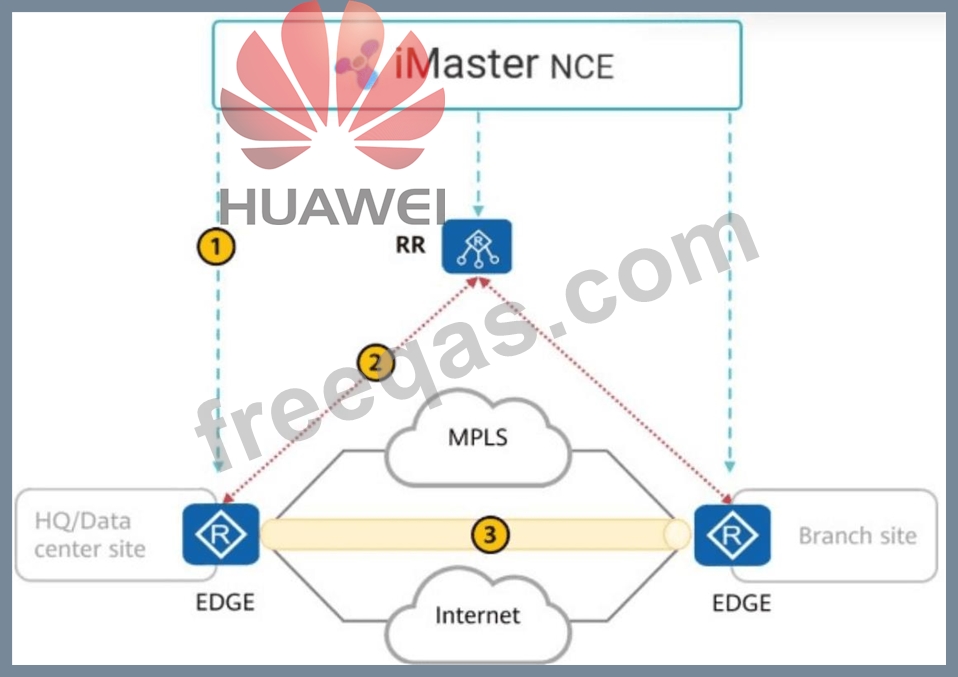
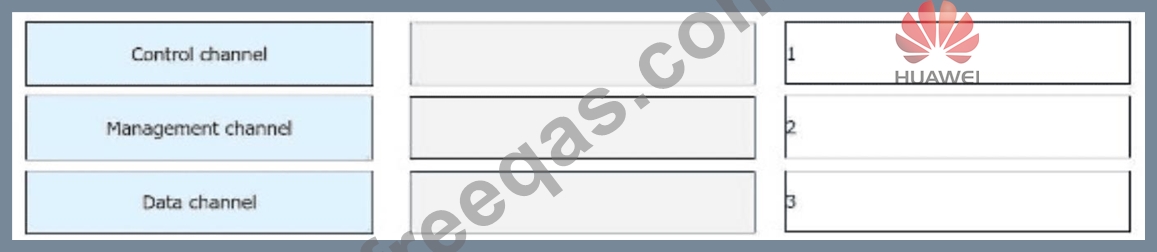
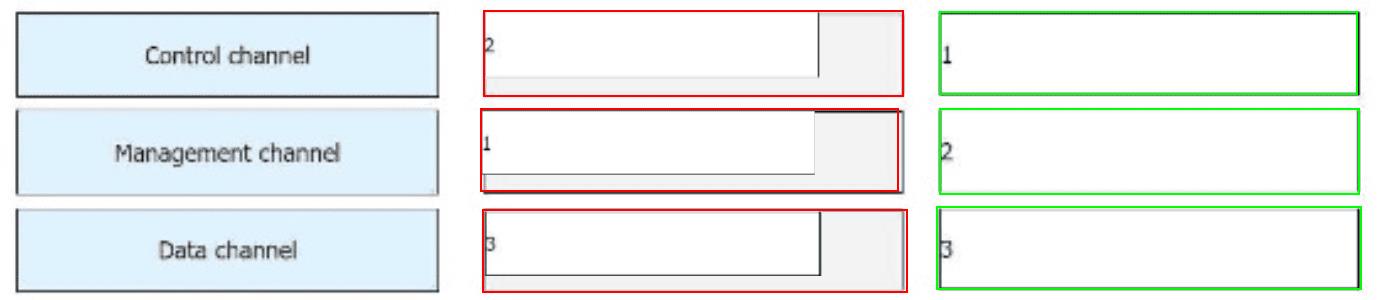
Correct Answer:
insert code

Question 269

To allow only authorized users (users who obtain IP addresses through authorized DHCP servers or use specified static IP addresses) to access the network shown in the figure, which of the following solutions can be used?
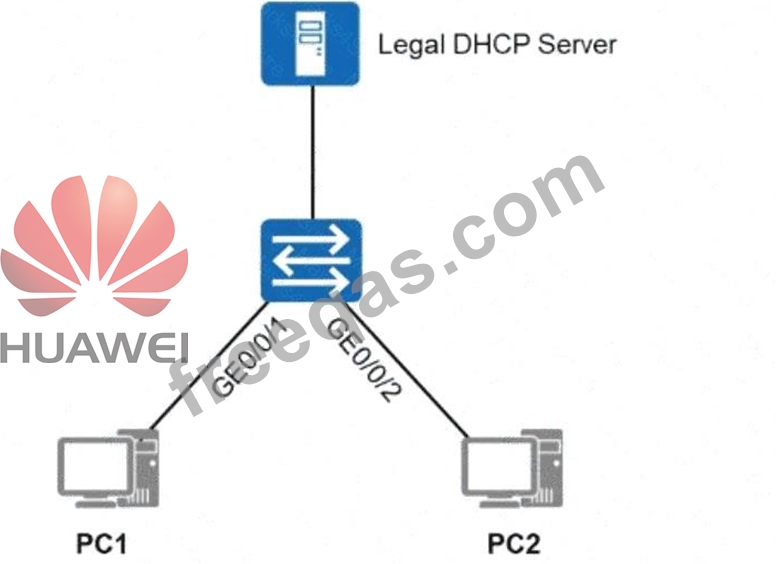
Correct Answer: B
Understanding Network Security for Authorized User Access
# Problem Scenario:
Only authorized users should be allowed network access.
Users can obtain IP addresses either via DHCP or a predefined static IP list.
Unauthorized users (e.g., attackers using rogue DHCP servers or spoofed IPs) must be blocked.
# Required Technologies for Securing Access:
1##DHCP Snooping- Protects againstrogue DHCP serversand builds abinding table of legitimate DHCP clients.
2##IP Source Guard (IPSG)- Ensures that onlyauthorized IP-MAC bindingscan send traffic.
Analysis of the Answer Choices:
#A. DAI + Port Security (Incorrect)
DAI (Dynamic ARP Inspection)prevents ARP spoofingbut doesnot validate IP-MAC-DHCP bindings.
Port Securityonlylimits MAC addresses per portbut doesnot verify IP addresses.
Does NOT protect against unauthorized static IP users.
#B. DHCP Snooping + IPSG (Correct)
DHCP Snooping:
Preventsrogue DHCP servers from assigning unauthorized IPs.
Builds aDHCP binding table(IP-MAC-Port).
IP Source Guard (IPSG):
Blocks trafficfrom IPs not listed in the DHCP snooping binding table.
Can be configured to allow manually specified static IP addresses.
Best choice to allow only authorized users (both DHCP and static IP users).
#C. DHCP Snooping + DAI (Incorrect)
DAI (Dynamic ARP Inspection) prevents ARP spoofingbutdoes not block unauthorized static IP users.
Lacks IP-level access controlneeded to enforce static IP policies.
#D. DAI + IPSG (Incorrect)
IPSG (IP Source Guard) needs DHCP Snooping to build the binding table.
Without DHCP Snooping, IPSG cannot function properly.
DAI does not provide complete protection against unauthorized users.
Why is the Answer B (DHCP Snooping + IPSG)?
#Ensures only users assigned a DHCP IP (or authorized static IPs) can send traffic.
#Blocks rogue DHCP servers and unauthorized static IP users.
Real-World Application:
Enterprise Networks:Prevents unauthorizedstatic IP users or attackers from accessing VLANs.
Public Wi-Fi Security:Ensures onlyauthorized users receive IPs and can send traffic.
#Reference:Huawei HCIE-Datacom Guide - DHCP Snooping and IPSG Security Mechanisms
insert code

Question 270

What is wrong with the following statement about digital certificates?

Correct Answer: B
insert code
  • ««
  • «
  • …
  • 50
  • 51
  • 52
  • 53
  • 54
  • 55
  • 56
  • 57
  • 58
  • 59
  • …
  • »
  • »»
[×]

Download PDF File

Enter your email address to download Huawei.H12-891_V1.0.v2026-06-05.q295 Dumps

Email:

FreeQAs

Our website provides the Largest and the most Latest vendors Certification Exam materials around the world.

Using dumps we provide to Pass the Exam, we has the Valid Dumps with passing guranteed just which you need.

  • DMCA
  • About
  • Contact Us
  • Privacy Policy
  • Terms & Conditions
©2026 FreeQAs

www.freeqas.com materials do not contain actual questions and answers from Cisco's certification exams.
