FreeQAs
 Request Exam  Contact
  • Home
  • View All Exams
  • New QA's
  • Upload
PRACTICE EXAMS:
  • Oracle
  • Fortinet
  • Juniper
  • Microsoft
  • Cisco
  • Citrix
  • CompTIA
  • VMware
  • ISC
  • SAP
  • EMC
  • PMI
  • HP
  • Salesforce
  • Other
  • Oracle
    Oracle
  • Fortinet
    Fortinet
  • Juniper
    Juniper
  • Microsoft
    Microsoft
  • Cisco
    Cisco
  • Citrix
    Citrix
  • CompTIA
    CompTIA
  • VMware
    VMware
  • ISC
    ISC
  • SAP
    SAP
  • EMC
    EMC
  • PMI
    PMI
  • HP
    HP
  • Salesforce
    Salesforce
  1. Home
  2. HBX Certification
  3. CORe Exam
  4. HBX.CORe.v2025-06-09.q185 Dumps
  • ««
  • «
  • …
  • 16
  • 17
  • 18
  • 19
  • 20
  • 21
  • 22
  • 23
  • 24
  • 25
  • …
  • »
  • »»
Download Now

Question 96

A sourcing manager completes negotiations for new business intelligence software, to be implemented by the company's fraud prevention department. The one-time licensing fee was originally quoted at $2,000,000, along with an 18% annual software maintenance fee. The sourcing manager was able to negotiate the license fee to
$1,500,000.
What are the hard dollar savings for the first year?

Correct Answer: A
The hard dollar savings for the first year is calculated by comparing the originally quoted license fee with the negotiated license fee. The original license fee was $2,000,000. After negotiations, the fee was reduced to
$1,500,000. The hard dollar savings is the difference between these two amounts:
Original fee: $2,000,000Negotiated fee: $1,500,000Hard dollar savings: $2,000,000 - $1,500,000 = $500,000 Therefore, the hard dollar savings for the first year is $500,000.
References:
* Monczka, R. M., Handfield, R. B., Giunipero, L. C., & Patterson, J. L. (2015). Purchasing and Supply Chain Management.
* ISM (Institute for Supply Management). (2020). ISM Glossary of Key Supply Management Terms.
insert code

Question 97

What transaction is presented in the above journal entry?

Correct Answer: D
insert code

Question 98

A firm issues an RFQ for specialty electronics to be used within a new product line. Internal needs are assessed and specifications are prepared by engineering. The bid is sent to five current suppliers, all of whom are familiar with the firm's supply chain. However, only two of these suppliers respond, and their quotes are much higher than expected. Which of the following is the MOST likely explanation for what occurred?

Correct Answer: B
insert code

Question 99

A researcher wants to know the impact that obesity and universal health care have on the amount a country spends on healthcare as measured by the percentage of gross domestic product (GDP). The researcher collects data from 30 countries on the percentage of the population considered to be obese and whether that country offers universal health care to their citizens. A dummy variable is constructed to measure the latter: the variable is set to equal 1 for countries that offer universal health care and 0 for those that do not. The researcher wishes to set up a regression analysis to measure the effects these two variables have on health care spending. A partial view of the data is shown below.
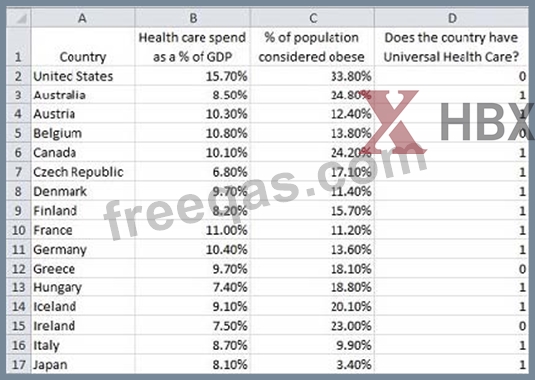
Based on the available data, what ranges should be entered into the Excel regression dialog box for the dependent and independent variables?

Correct Answer: D
insert code

Question 100

A company purchases a high-value product In an industry known for slow turnover on receivables. This creates issues with cash flow and presents a special challenge to supply management. Given this situation, which of the following should this firm negotiate to BEST avoid difficulties in the buyer/supplier relationship?


Correct Answer: A
* Industry Challenge: Slow turnover on receivables affects cash flow, presenting a challenge in maintaining a healthy buyer/supplier relationship.
* Extended NET Terms: Negotiating extended payment terms can provide the buyer with additional time to manage cash flow effectively without straining the relationship with the supplier.
* Cash Flow Management: Extended terms help align payment schedules with cash inflows, reducing the financial pressure on the buyer.
* Mutual Benefit: This approach is mutually beneficial as it provides the supplier with a predictable payment schedule while offering the buyer improved cash flow flexibility.
References
* ISM. (n.d.). Managing Payment Terms in Supply Chain.
* CIPS. (n.d.). Negotiating Payment Terms and Conditions.
insert code
  • ««
  • «
  • …
  • 16
  • 17
  • 18
  • 19
  • 20
  • 21
  • 22
  • 23
  • 24
  • 25
  • …
  • »
  • »»
[×]

Download PDF File

Enter your email address to download HBX.CORe.v2025-06-09.q185 Dumps

Email:

FreeQAs

Our website provides the Largest and the most Latest vendors Certification Exam materials around the world.

Using dumps we provide to Pass the Exam, we has the Valid Dumps with passing guranteed just which you need.

  • DMCA
  • About
  • Contact Us
  • Privacy Policy
  • Terms & Conditions
©2026 FreeQAs

www.freeqas.com materials do not contain actual questions and answers from Cisco's certification exams.