A bootstrap USB flash drive has been prepared using a Windows workstation to load the initial configuration of a Palo Alto Networks firewall that was previously being used in a lab. The USB flash drive was formatted using file system FAT32 and the initial configuration is stored in a file named init-cfg.txt. The firewall is currently running PAN-OS 10.0 and using a lab config. The contents of init-cgf.txt in the USB flash drive are as follows:
type=dhcp-client
Ip-address=
default-gateway=
netmask=
Ipv6-address=
Ipv6-default-gateway=
hostname=Ca-FW-DC1
panorama-server=10.5.107.20
panorama-server-2=10.5.107.21
tplname=FINANCE_TG4
dgname=finance_dg
dns-primary=10.5.6.6
dns-secondary=10.5.6.7
op-command-modes-multi-vsys.jumbo-frame
dhcp-send-hostname=yes
dhcp-send-client-id=yes
dhcp-accept-server-hostname=yes
dhcp-accept-server-domain=yes
The USB flash drive has been inserted in the firewalls' USB port, and the firewall has been restarted using command> request restart system Upon restart, the firewall fails to begin the bootstrapping process. The failure is caused because:
Check the history of deployment
Score: 7%
Task
Create a new NetworkPolicy named allow-port-from-namespace in the existing namespace echo. Ensure that the new NetworkPolicy allows Pods in namespace my-app to connect to port 9000 of Pods in namespace echo.
Further ensure that the new NetworkPolicy:
* does not allow access to Pods, which don't listen on port 9000
* does not allow access from Pods, which are not in namespace my-app
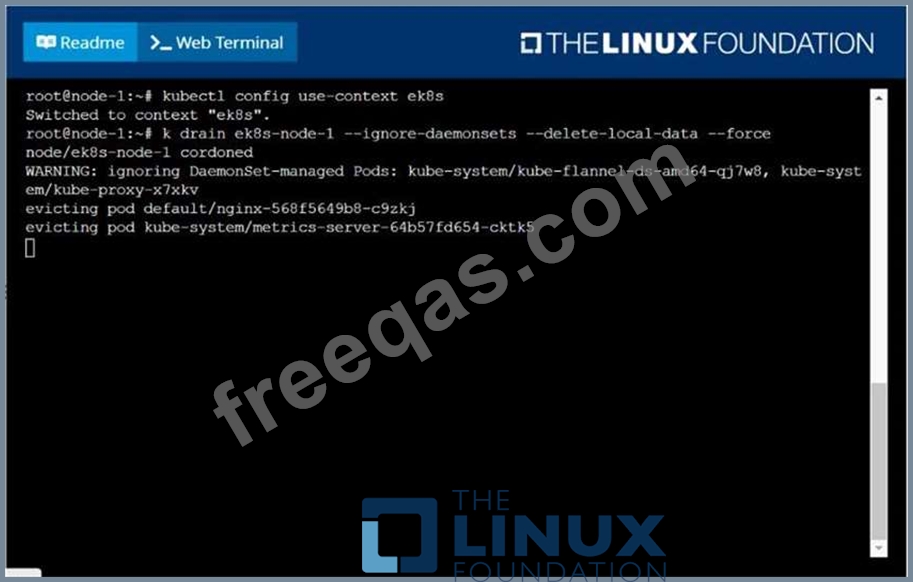
Set the node named ek8s-node-1 as unavailable and reschedule all the pods running on it.
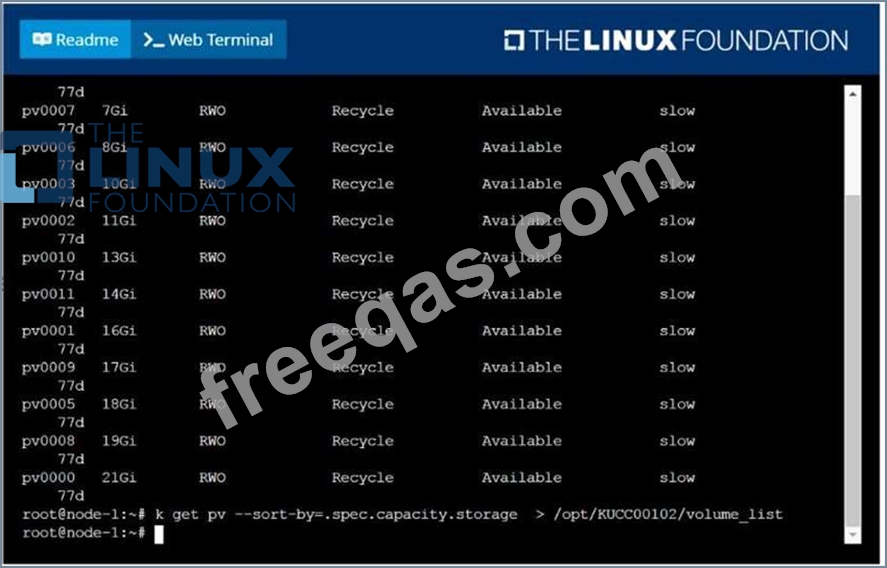
List all persistent volumes sorted by capacity, saving the full kubectl output to /opt/KUCC00102/volume_list. Use kubectl 's own functionality for sorting the output, and do not manipulate it any further.
Enter your email address to download LinuxFoundation.CKA.v2022-12-07.q68 Dumps

